
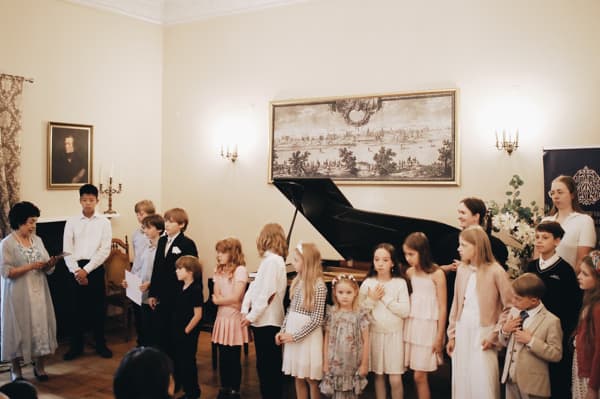
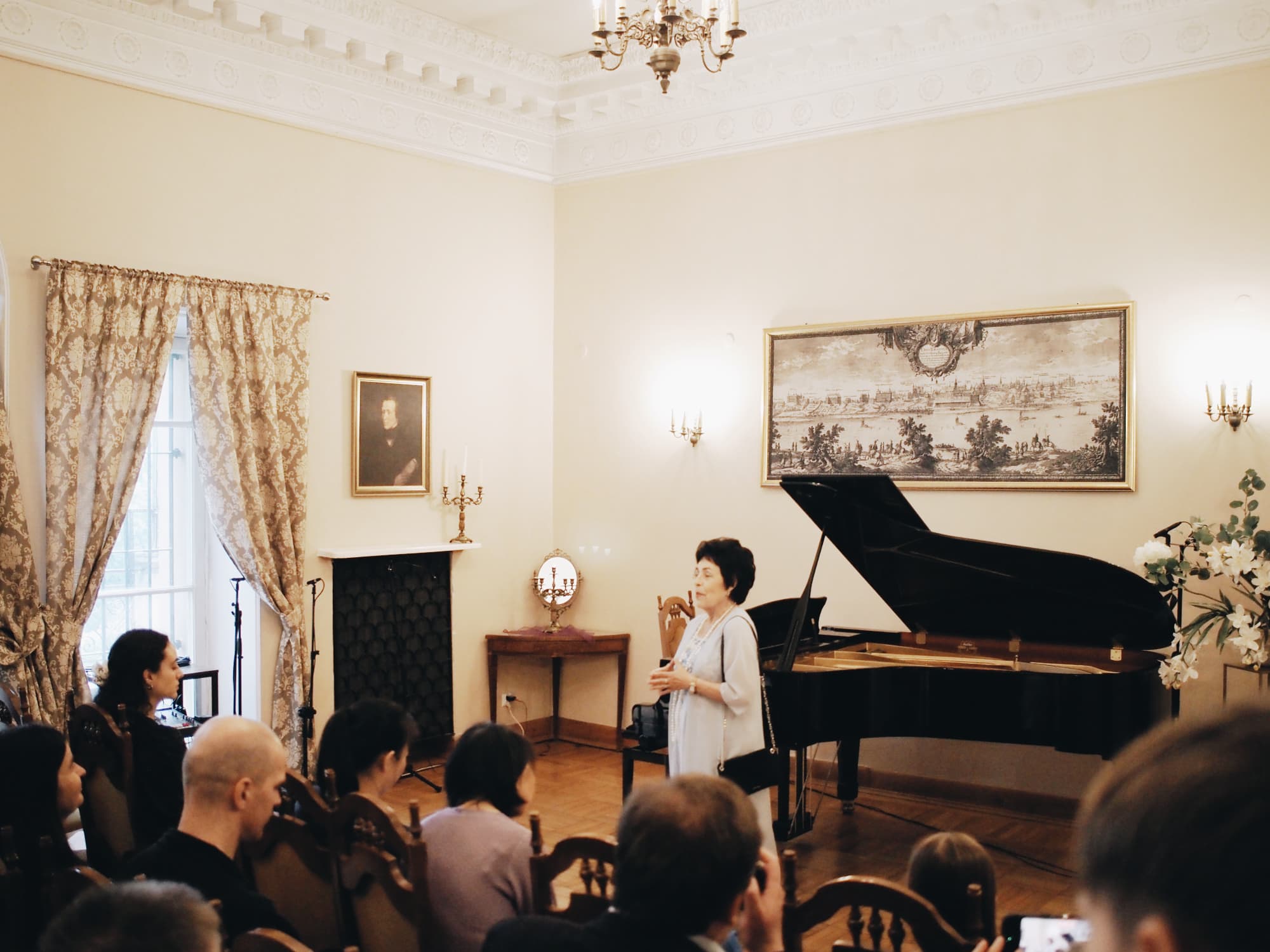
On 14 June 2026 we gathered at the Szuster Palace in Warsaw for our Annual Concert. This is the concert that closes the school year and sums up a whole year of work on the instrument, which is why everyone came to the Palace in such good spirits.
The audience was made up of our students’ parents, grandparents and siblings. We built the programme so that the first independent miniatures of the youngest players would sit alongside pieces by students who have been with us for several years. The running order took listeners from short pieces lasting under a minute all the way to movements of sonatas and concertos.
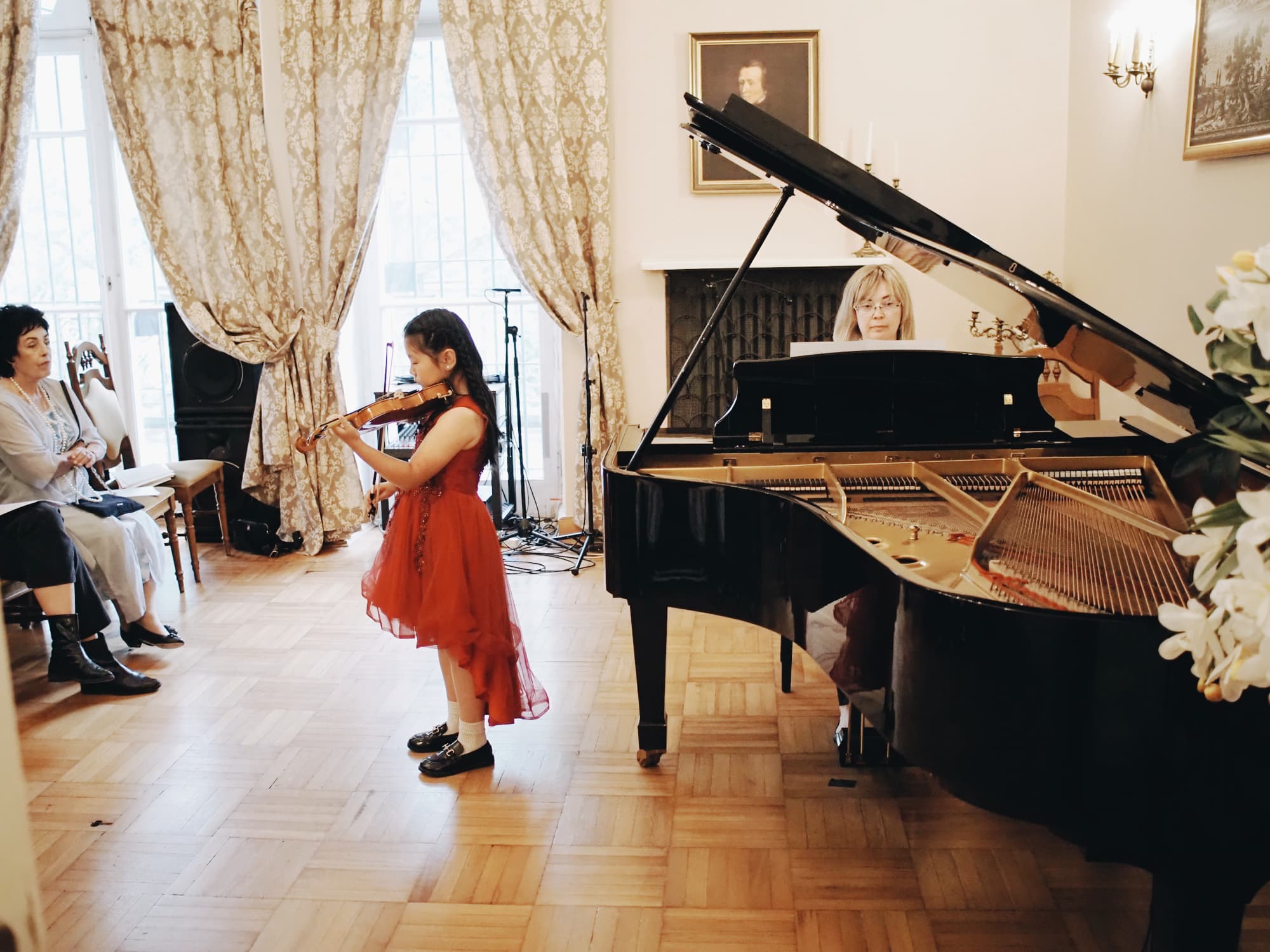
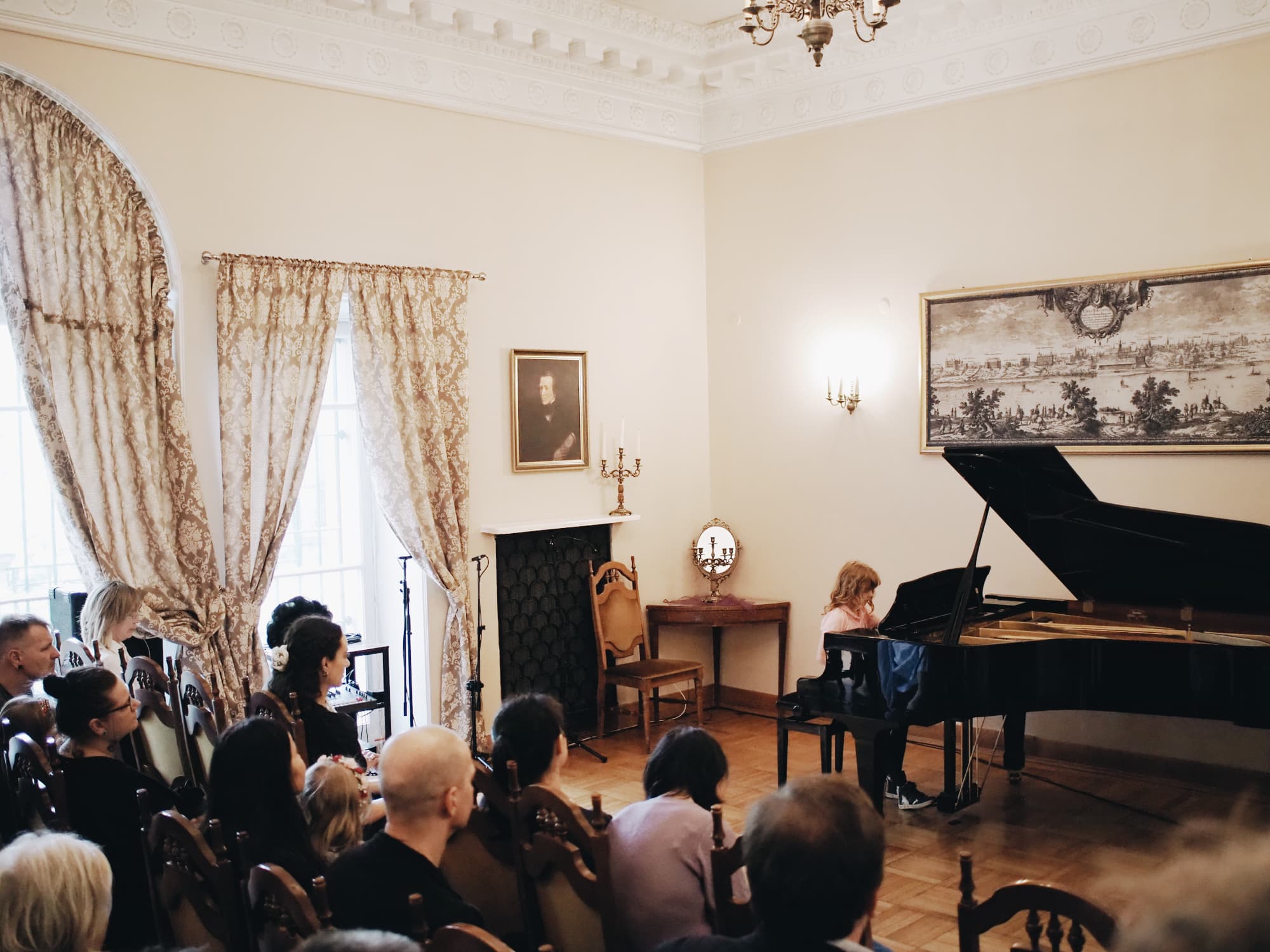
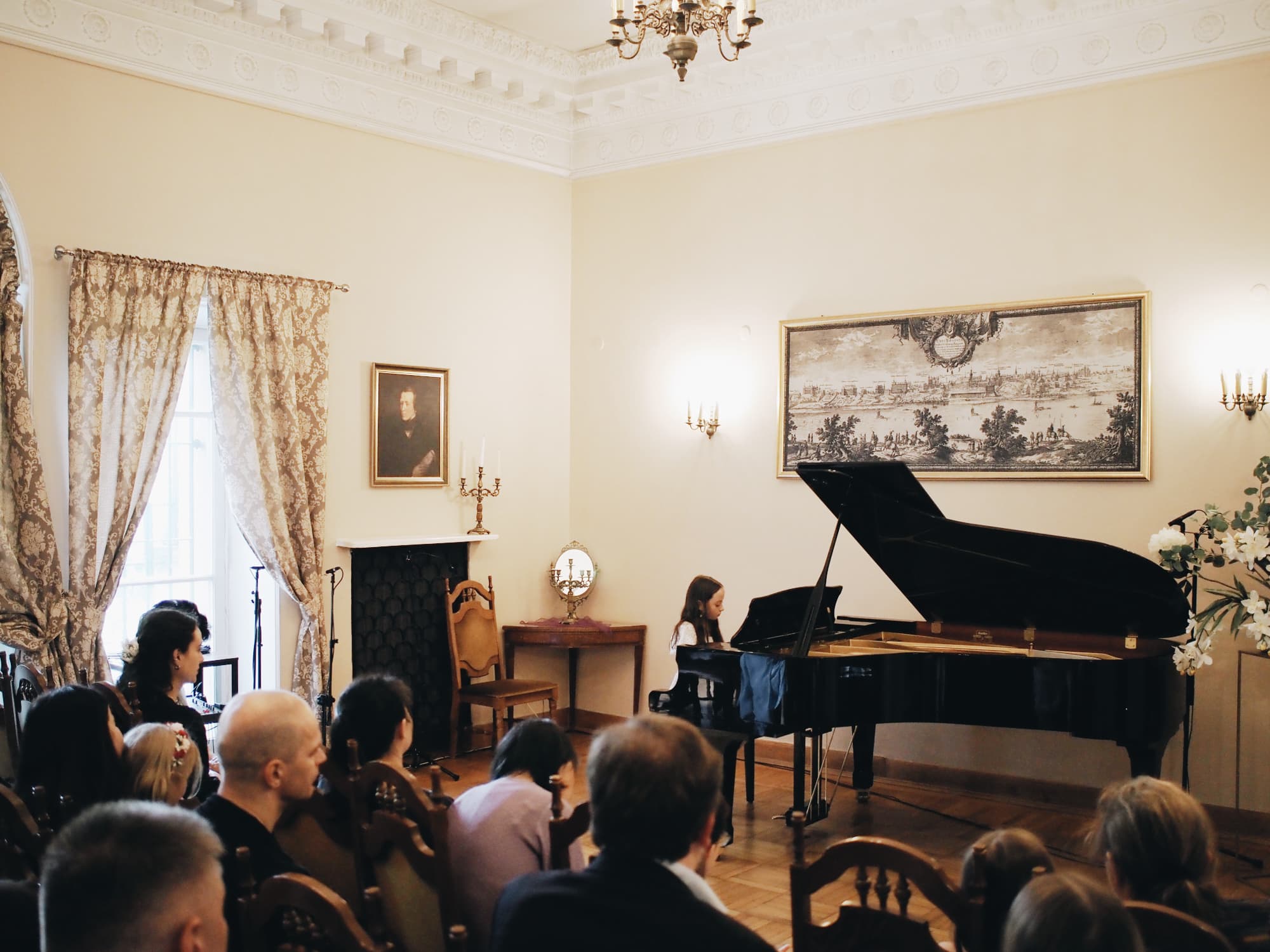
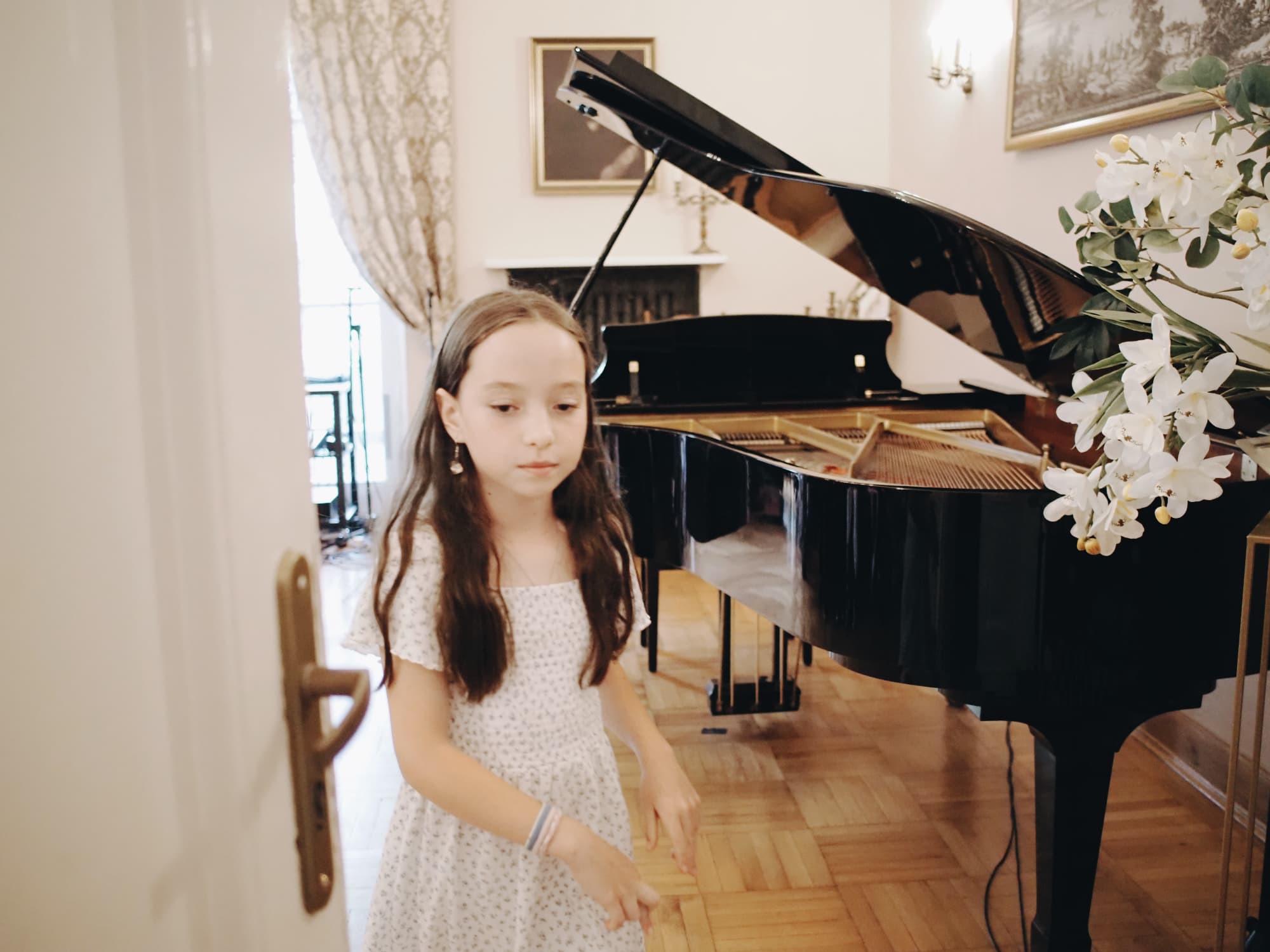
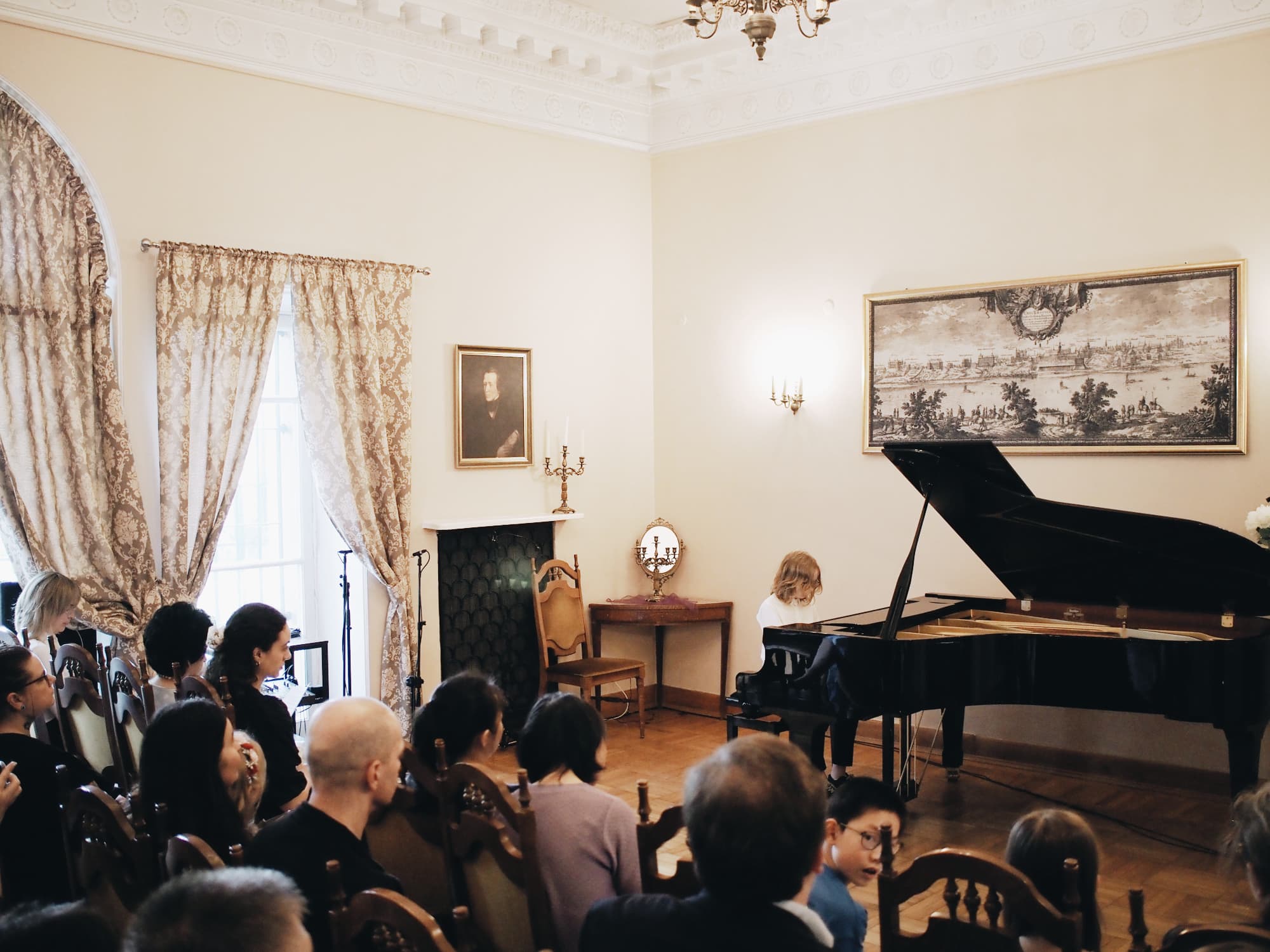
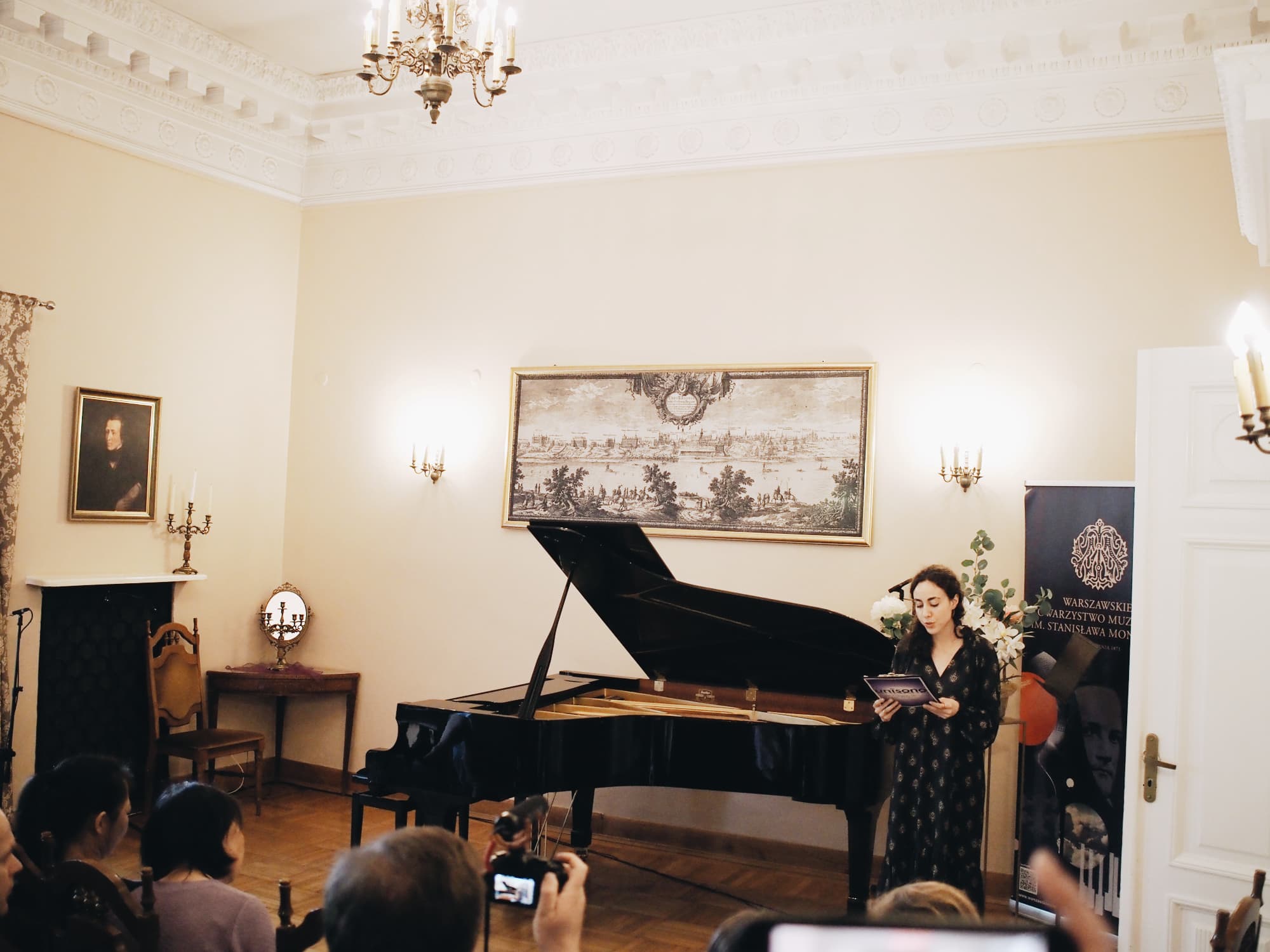
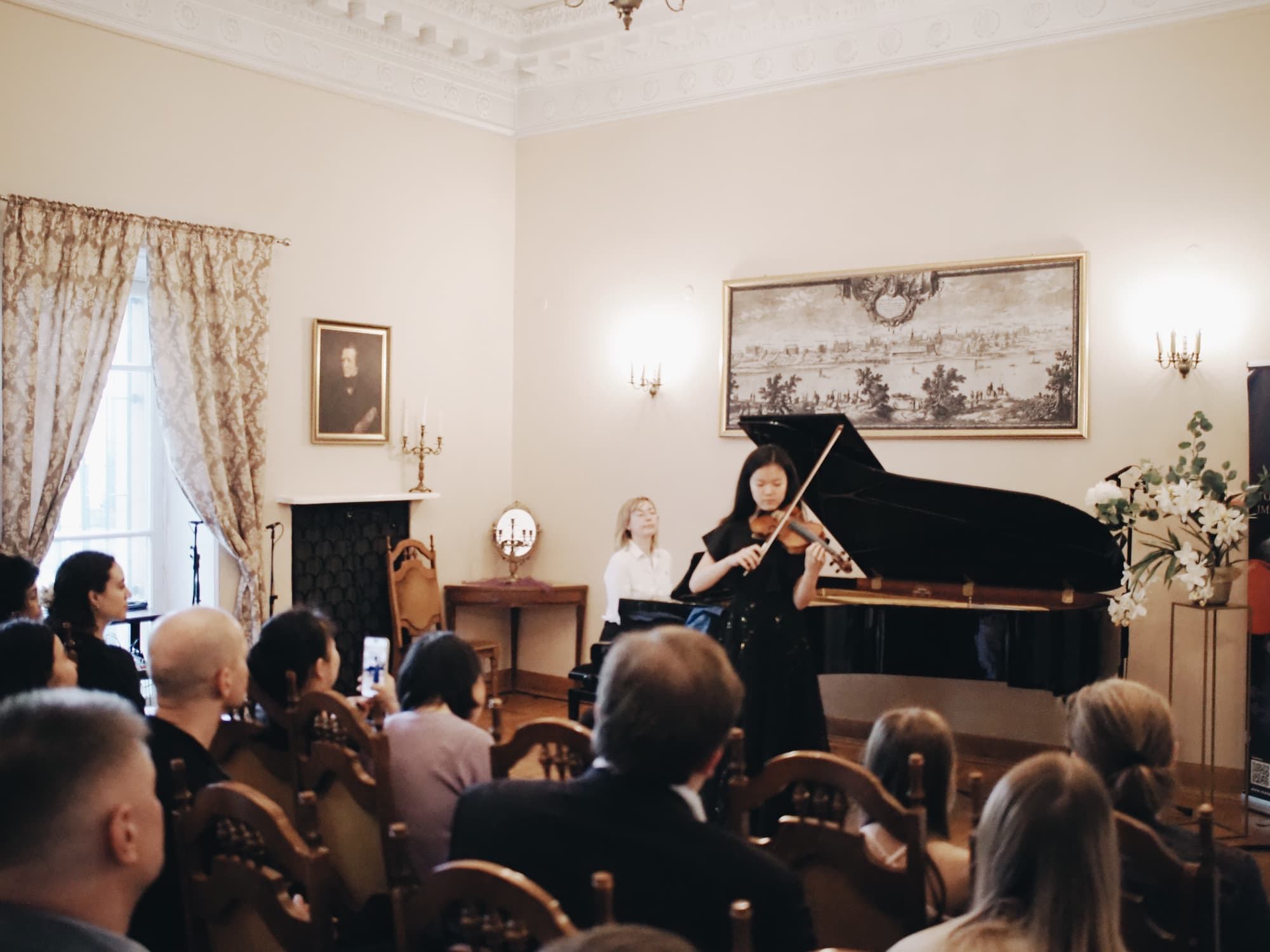
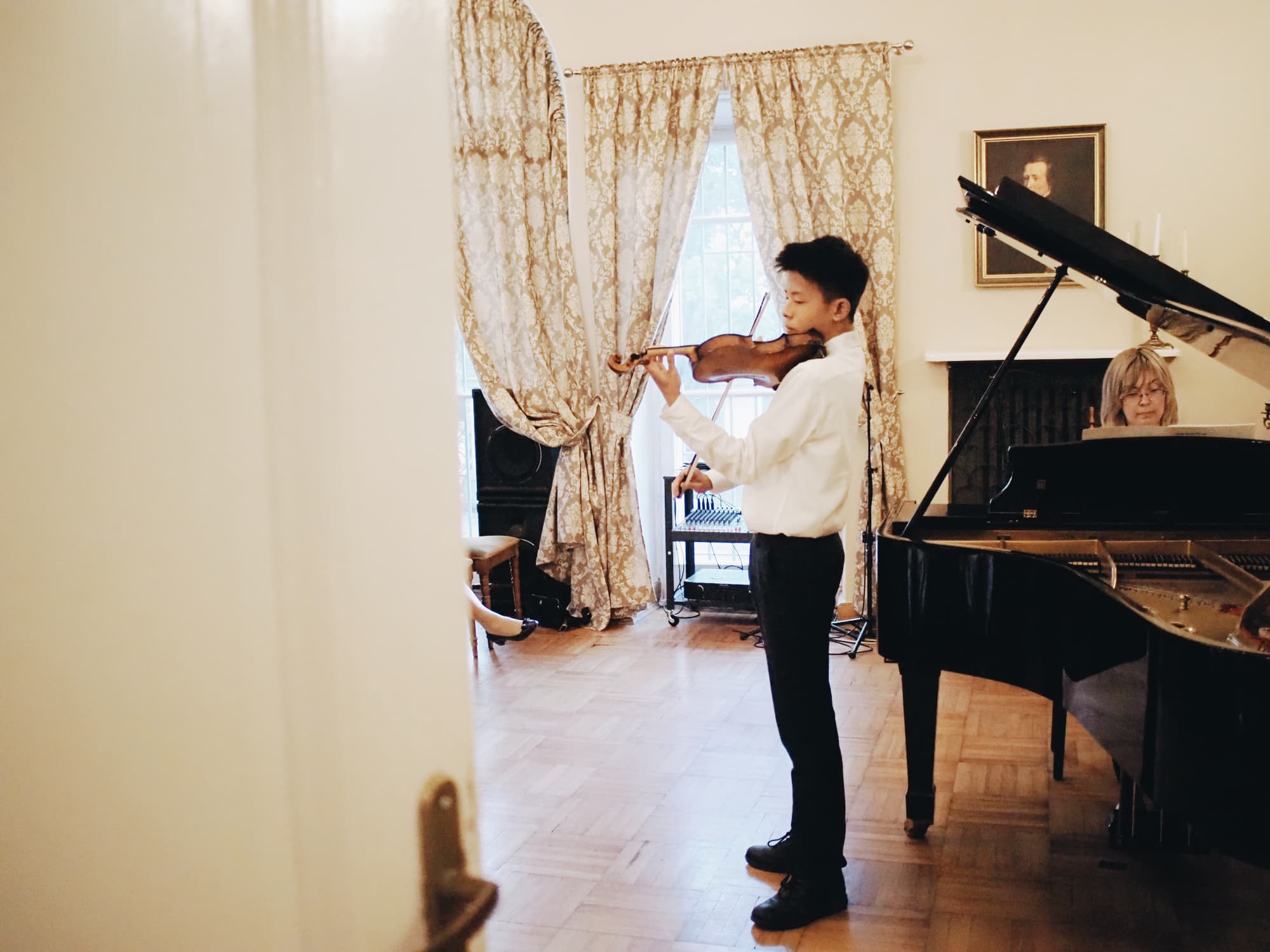

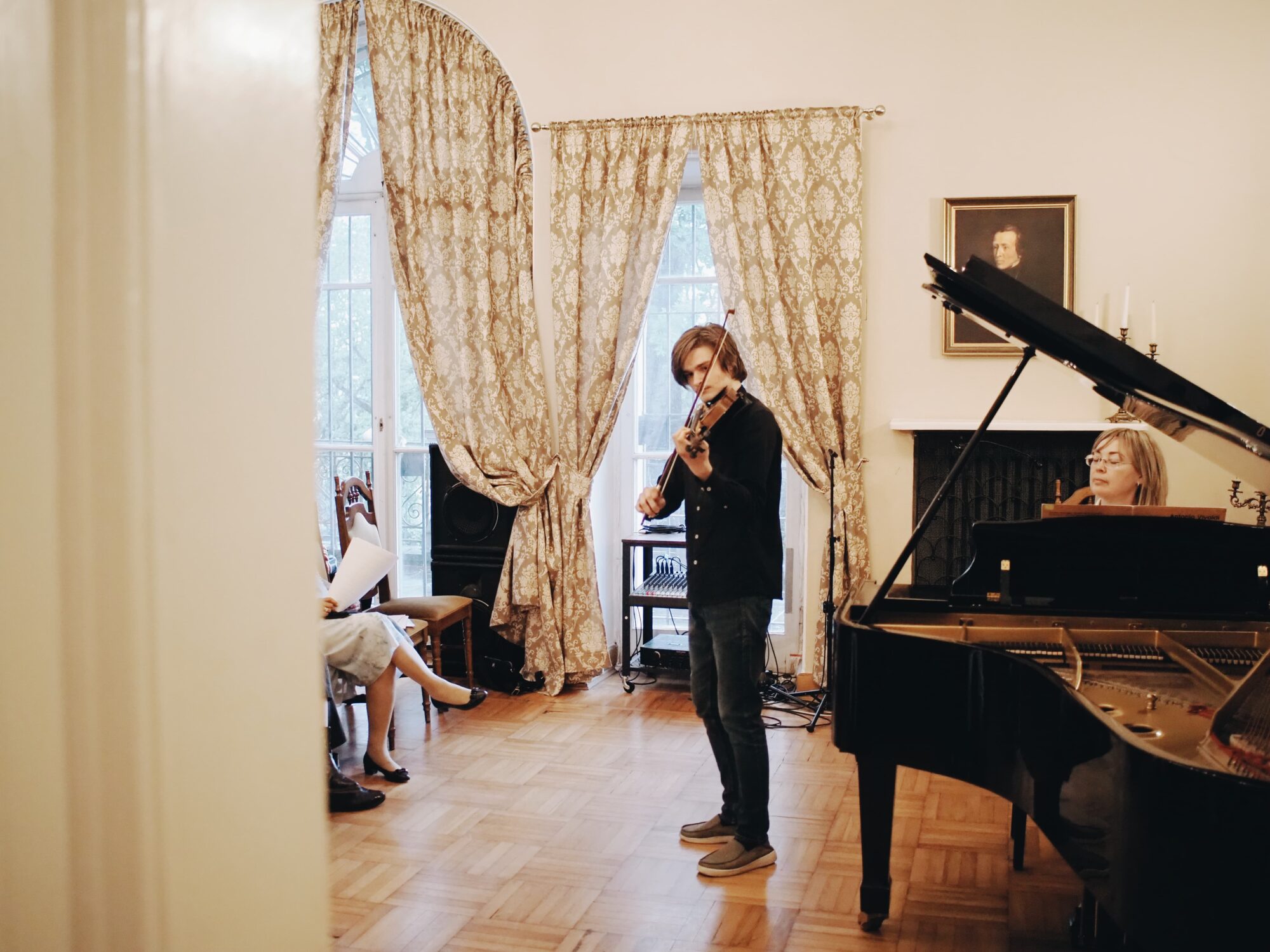


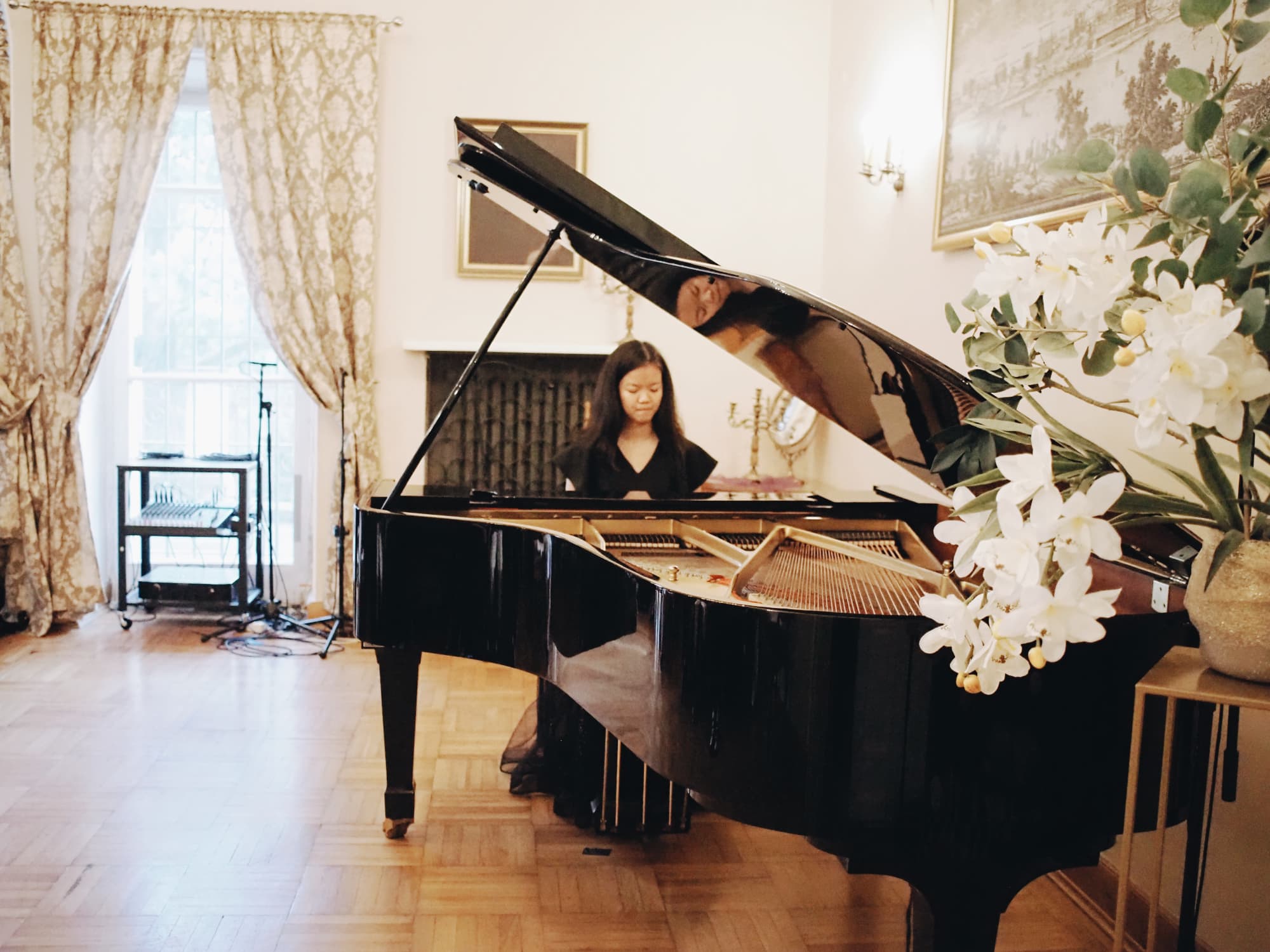

The concert opened with a performance by Czuczu, a student of Piotr Nermer, who played the Sarabande in D minor and the Gavotte by Arcangelo Corelli.
From the piano class of Anastazja Seraya:
- Simone Skomaravskaya and Noah Alameda-Mulas, who played the traditional French song “Ah! les crocodiles” as a duet,
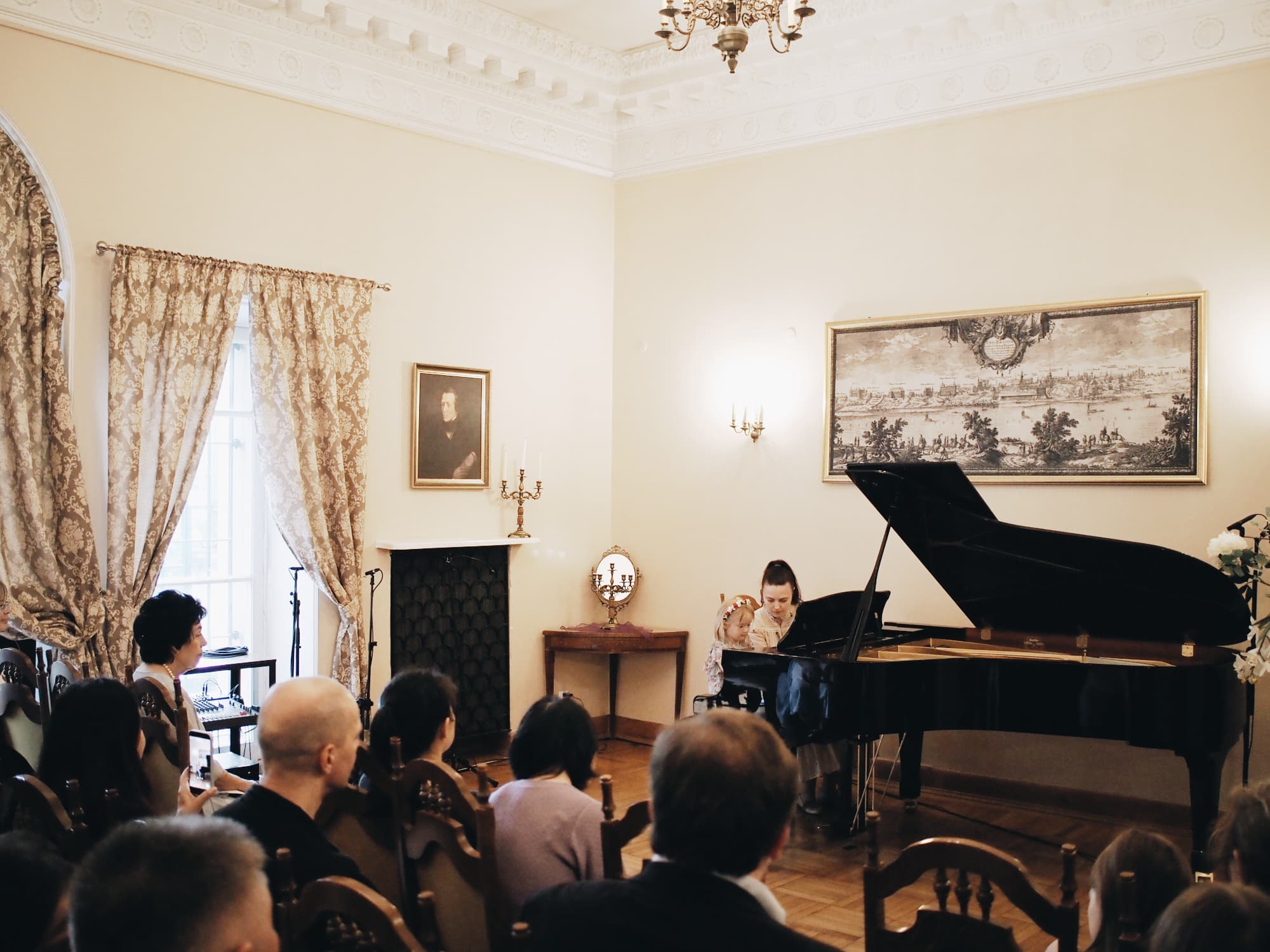
- little Antonia Marks, who played “March” by Dorota Orczyk on the piano and then sang a solo “Lullaby” by the same composer,
- Laura Altenberg, whom we heard in the miniature “Night Creatures” by Agnieszka Lasko,
- Max Szubert with “The Elephant Herold” by June Armstrong,
- Laura Szubert in the traditional German song “Muss i denn”,
- the siblings Max and Laura Szubert, who played “The Clown” by Maria Grzebalska as a duet,
- Jeremi Filar with the “Turkish March” by Wolfgang Amadeus Mozart.
From the piano class of Hanna Malashka:
- Julian Farafonow, whom we heard in “Passo bem solto” by Diego Basile,
- his sister Klara Farafonow in “Nic dwa razy się nie zdarza” from the repertoire of Sanah,
- Marcelina Rytel with a passage from “Für Elise” by Ludwig van Beethoven,
- Viktor Klimaszewski, who performed three miniatures by Anna Martyniuk: “Big Storm”, “Atmospheric Triad” and “The Barefoot Rooster”,
- Barbara Burnos with “The Entertainer” by Scott Joplin and a passage from “Morning Mood” by Edvard Grieg,
- Feliks Witecki with a passage from the “Moonlight Sonata” by Ludwig van Beethoven,
- Melania Mayanowa, who performed the “Polovtsian Dances” from Alexander Borodin’s opera “Prince Igor” in a duet with her teacher, together with “San Francisco Blues” by Martha Mier.
From the piano class of Tatiana Fedchun:
- Aistis Germanavicius with the Scherzo from Sonatina no. 4 by Joseph Haydn.
Aistis Germanavicius also appeared on the flute, in an Aria by Henry Purcell. He studies the flute in the class of Kaja Morawiec.

From the violin class of Piotr Nermer:
- Czuczu with the Sarabande and Gavotte by Arcangelo Corelli,
- Mateusz Matys with the first movement of the Concerto in G major by Antonio Vivaldi,
- Weronika Brona with “The Piper” by Henryk Wieniawski,
- Walentina Khodas, whom we heard in the “Tango” by Isaac Albéniz.
The violin class of Zofia Zwolińska was represented by:
The students of Zofia Zwolińska, founder and director of the school, were heard in the following repertoire:
- Łucja Szlesinger-Lipska, who played the miniature “The Little Train” from the violin teaching repertoire,
- Rouxi Wang with the “Romance” by Natalia Baklanova,
- Ting Yui Lenung, whom we heard in a violin arrangement of the famous song “Fly Me to the Moon” by Bart Howard,
- Lukas Germanavicius with the first and second movements of the Sonata in A major by Arcangelo Corelli.
The concert closed with a guest appearance at the piano by Rouxi Wang, who performed a piano arrangement of music from “Pirates of the Caribbean”.
The violin and flute students were accompanied by Tatiana Fedchun, and the soloists were introduced by Liza Maria Pietraga.
The programme of the concert
Music from several centuries was heard on the platform. The baroque was represented by Arcangelo Corelli, Antonio Vivaldi and Henry Purcell. From the classical period we heard Joseph Haydn, Wolfgang Amadeus Mozart and Ludwig van Beethoven, while the nineteenth century was recalled by Henryk Wieniawski, Edvard Grieg, Alexander Borodin and Isaac Albéniz.
A separate place in the programme went to pieces written with students in mind: miniatures by Dorota Orczyk, Agnieszka Lasko, Maria Grzebalska, Anna Martyniuk and Natalia Baklanova, along with compositions by June Armstrong, Martha Mier and Diego Basile. Such pieces are matched to what a child’s hand can do, and yet they sound like real music rather than a technical exercise. For the youngest soloists they are often the first piece they can play from beginning to end without help from the teacher.
There was no shortage of music the students know from outside their lessons either. Klara Farafonow played “Nic dwa razy się nie zdarza” from the repertoire of Sanah, Ting Yui Lenung reached for “Fly Me to the Moon” by Bart Howard, Barbara Burnos performed a Scott Joplin rag, and the whole concert was closed by music from “Pirates of the Caribbean”. Two traditional songs, the French “Ah! les crocodiles” and the German “Muss i denn”, were a reminder that school repertoire can simply be cheerful.
Duets and playing with accompaniment

The Annual Concert is an opportunity for us to show more than solo playing. Simone Skomaravskaya and Noah Alameda-Mulas appeared together at a single piano, as did the siblings Max and Laura Szubert. Melania Mayanowa played a duet with her teacher, and the violin and flute students were accompanied at the piano by Tatiana Fedchun.
Playing with another person teaches things that solo practice cannot. You have to listen to your partner, hold a shared tempo and know when to give way as the melody passes to the other part. Students who have played one duet usually ask for another themselves.
Two performances deserve a separate mention: Antonia Marks, who combined playing the piano with singing, and Aistis Germanavicius, who appeared on two instruments that afternoon, at the piano and with the flute.
How we prepare students for a performance
The repertoire for the Annual Concert is agreed with each student separately, several months in advance. The piece has to be demanding enough that working on it teaches something, and safe enough that it can be played in front of an audience without undue stress. That distinction matters more than it appears from the outside.
In the final weeks before the concert the way of practising changes. Instead of working on individual bars, the student plays the piece whole, from beginning to end, without stopping at slips. The point is to be able to recover from a small mistake on the platform and carry on, rather than going back to the start of the phrase.
A great deal depends on what happens at home. Fifteen minutes at the instrument every day does more than one long session on a Saturday, and keeping an eye on that is the job of parents and grandparents. This is why thanking them is a fixed part of our concerts.
The end of the school year
The Annual Concert was a summing up of a whole year of work by students and teachers alike. The joy of performing in front of an audience was a reward for every soloist and gave them a sense that their efforts had paid off.
After the concert the director of the school, Zofia Zwolińska, invited all the soloists onto the platform. The students were rewarded with warm applause from the audience, and Zofia Zwolińska thanked the teachers for a year of work and the parents and grandparents for supporting their children’s musical development.

For some of the students this was their first public appearance, for others another step in several years of learning. We wish them all a good summer, and we ask that the instrument does not stay shut in its case for two months. Coming back to it every few days is enough to avoid starting again from scratch in September.
The Szuster Palace, home of our concerts
Our school concerts have been held for years at the Szuster Palace at ul. Morskie Oko 2 in the Mokotów district of Warsaw. The building stands on the Vistula escarpment, in Morskie Oko park, a few minutes’ walk from Puławska Street. Many people pass it for years without realising there is a concert hall inside.
From Lubomirska’s villa to the Szuster family
The history of the site begins in the 1770s. A suburban villa was built here between 1772 and 1775 for Princess Izabela Lubomirska, née Czartoryska, to a design by Efraim Szreger. The garden around it was laid out by Szymon Bogumił Zug, and the whole estate was given the French name Mon Coteau, meaning “my hillside”.
After the princess died in 1816 the estate passed to her grandson Aleksander Potocki and his wife Anna, née Tyszkiewicz. In 1845 it was bought by the Warsaw lithographer Franciszek Szuster, and it is from his name that the palace takes its present one. A rebuilding in the neo-Gothic spirit was carried out at that time by Henryk Marconi, and a further neo-Renaissance remodelling in 1852 by Adam Idźkowski. The Szuster family lived here until the Second World War.
The palace after the war
The palace burned down in 1944. It was rebuilt between 1962 and 1965 under the direction of Jerzy Brabander, which restored its neo-Gothic form, and in 1965 it was entered in the register of historic monuments. Traces of the original garden layout survive in the park, among them the dovecote and the gate pavilion known as the gloriette, along with the Szuster family mausoleum from the end of the nineteenth century.
Home of the Warsaw Music Society
Today the Szuster Palace is the seat of the Stanisław Moniuszko Warsaw Music Society. It houses a concert hall and the Gothic Room, and leading Polish musicians have performed on its platform for decades. Teachers from our own school have given concerts here too, among them the director, Zofia Zwolińska.
For students, playing in a room like this is different from performing in a school hall. The room is small, the audience sits close to the platform, and the acoustics forgive nothing careless, yet they carry the sound of a violin or a piano beautifully. A young musician hears themselves differently than at home and quickly understands why they spent the whole year working on tone rather than just on notes. Then there is the park outside the windows, in full leaf in June.
We invite you to read about our teachers on the teachers page, to visit the gallery with recordings from earlier concerts, and to join us at the next concerts of our school at the Szuster Palace.
Sources on the Szuster Palace
The dates, the names of the architects and the succession of owners are given after the following sources:
- Pałac Szustra, entry in the Polish Wikipedia, accessed 29 August 2026.
- Pałac Szustrów, object record in the zabytek.pl portal run by the National Heritage Board of Poland.
- Pałac Szustrów, article on varsavianista.pl, 28 May 2022.
- The Stanisław Moniuszko Warsaw Music Society, website of the present occupant of the palace.