
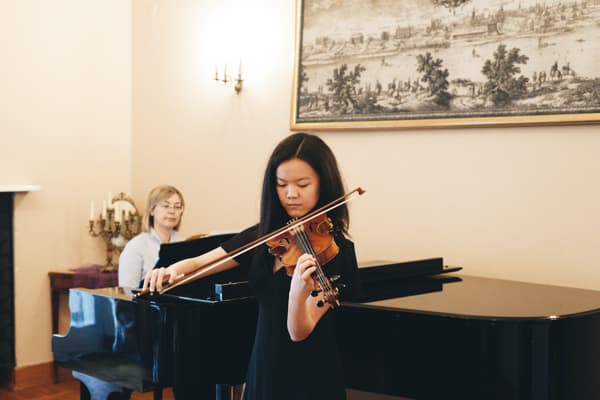
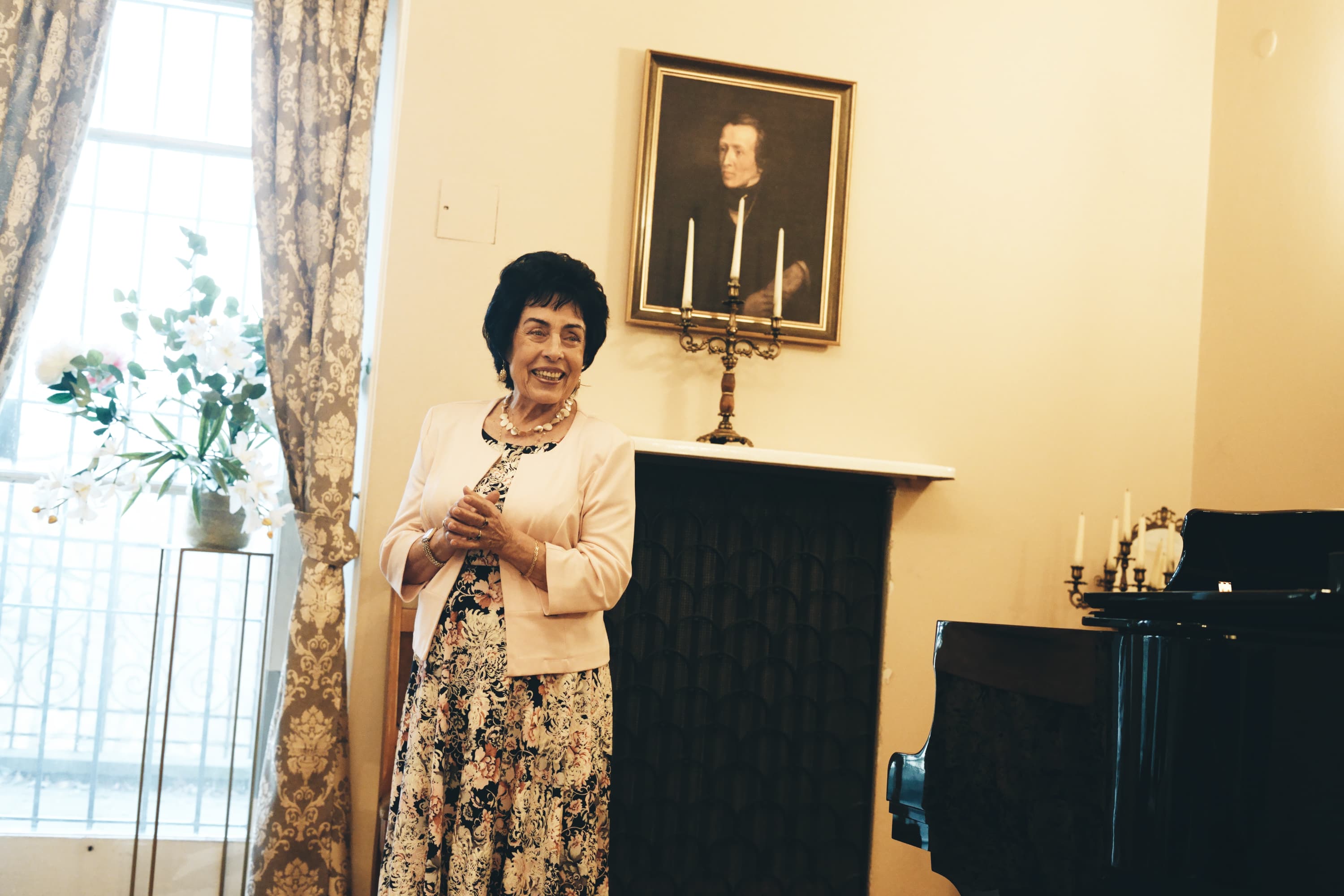
The Spring Concert took place on 29 March 2026 at the historic Szuster Palace in Warsaw. The weather that day was properly spring-like, and the students came to the platform happy to show what they had been working on over the previous months.
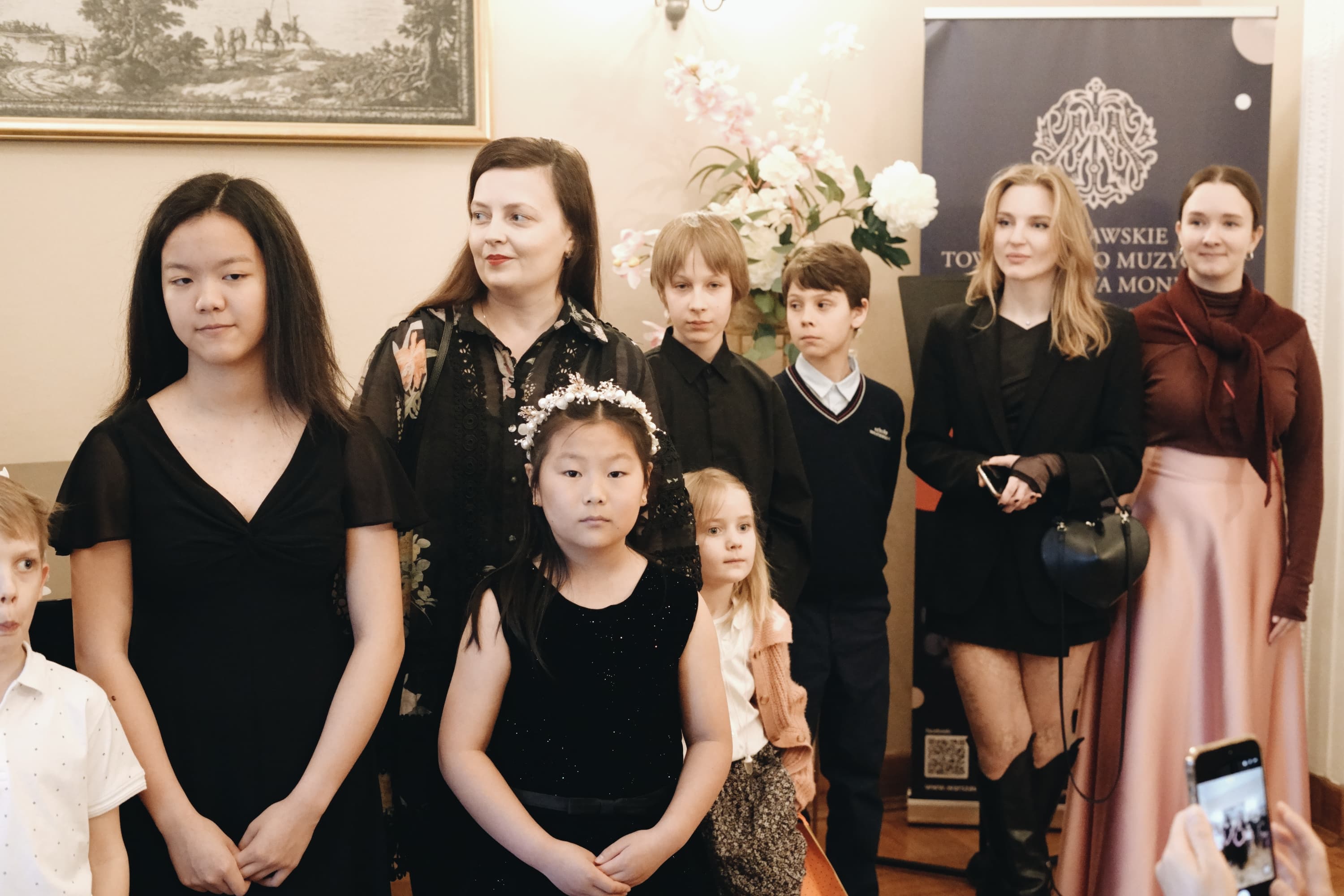
Twenty soloists from the piano, violin and flute classes performed. The youngest played together with their teacher, while the oldest reached for whole movements of sonatas. The audience was made up of the students’ parents, grandparents and siblings.
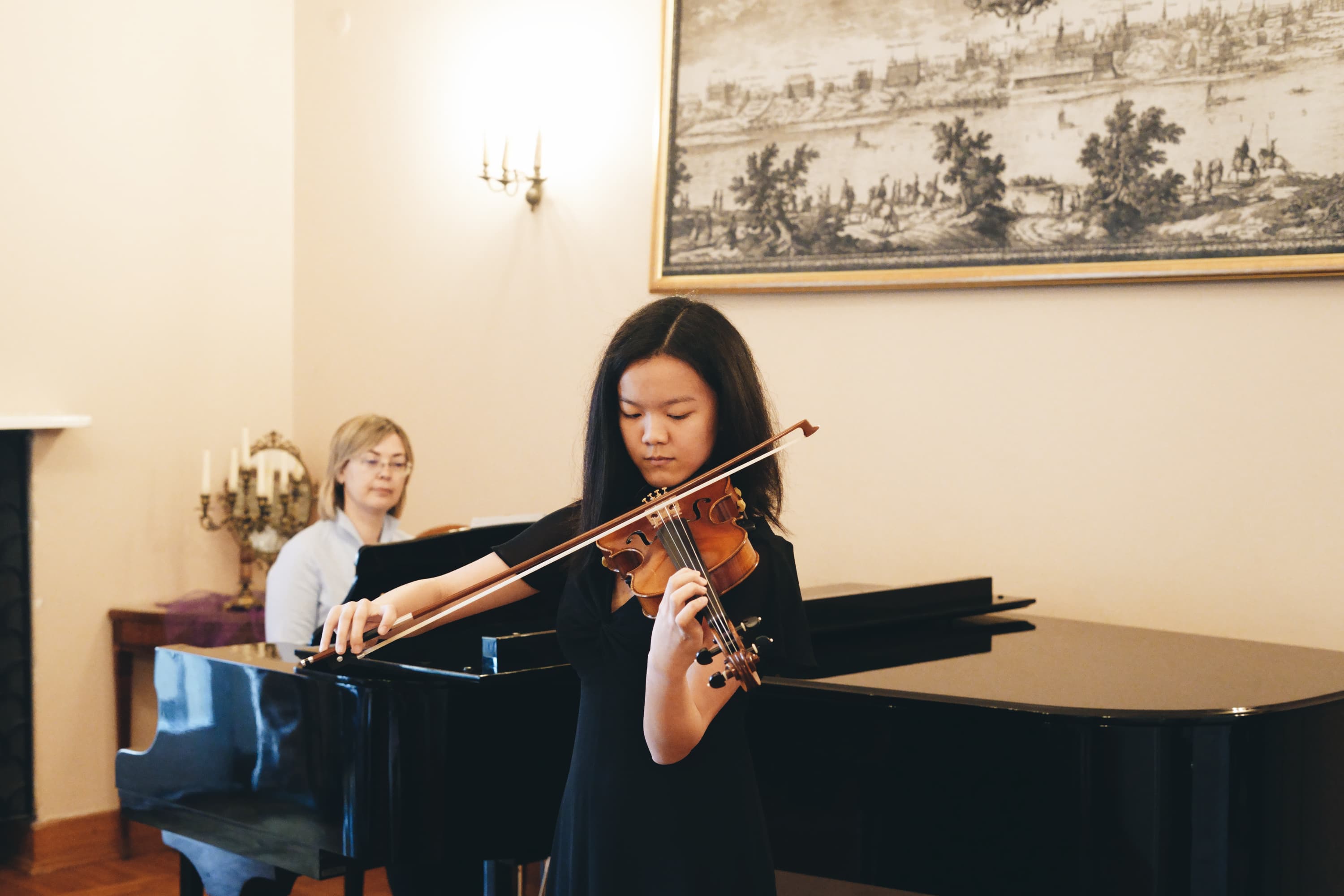



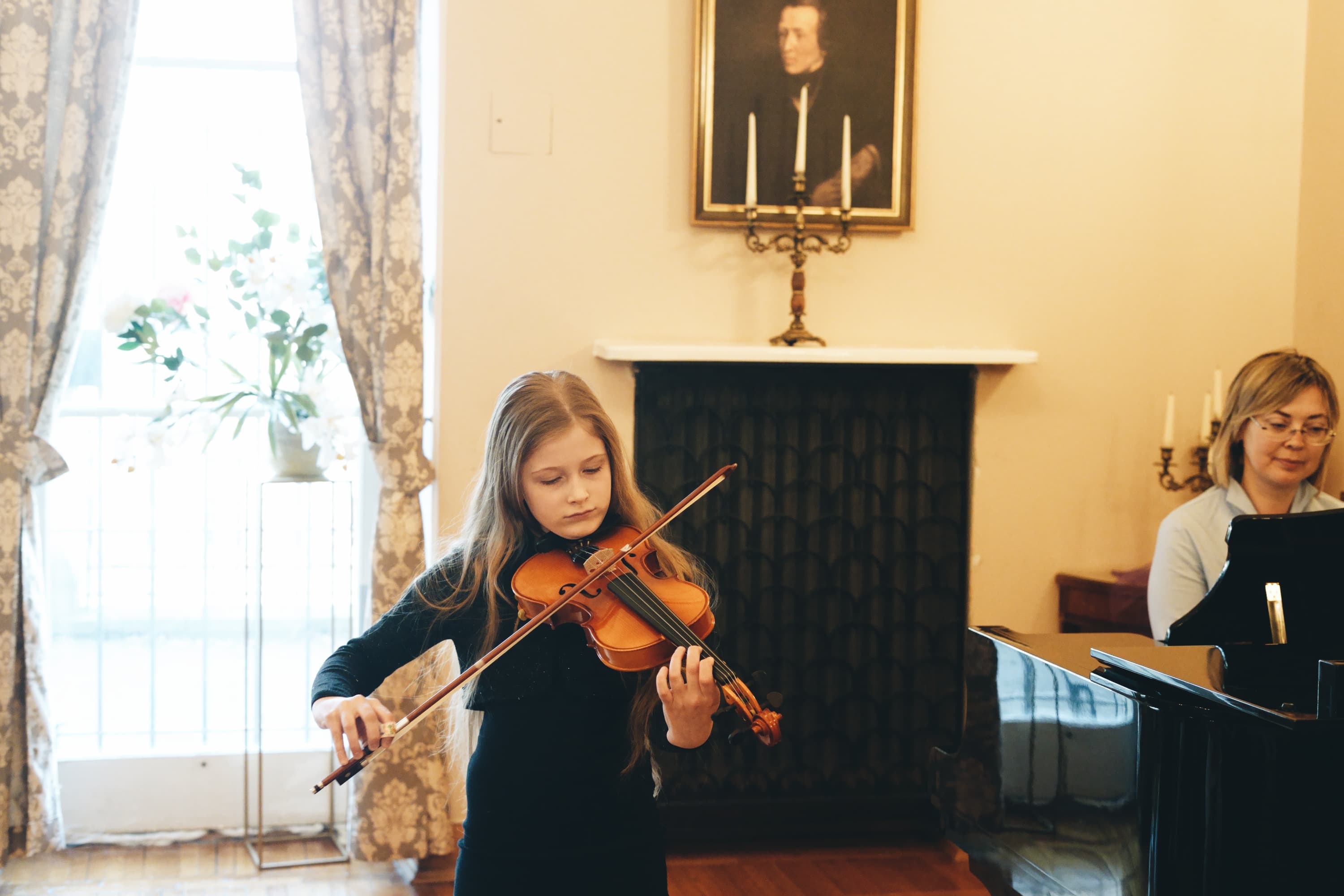


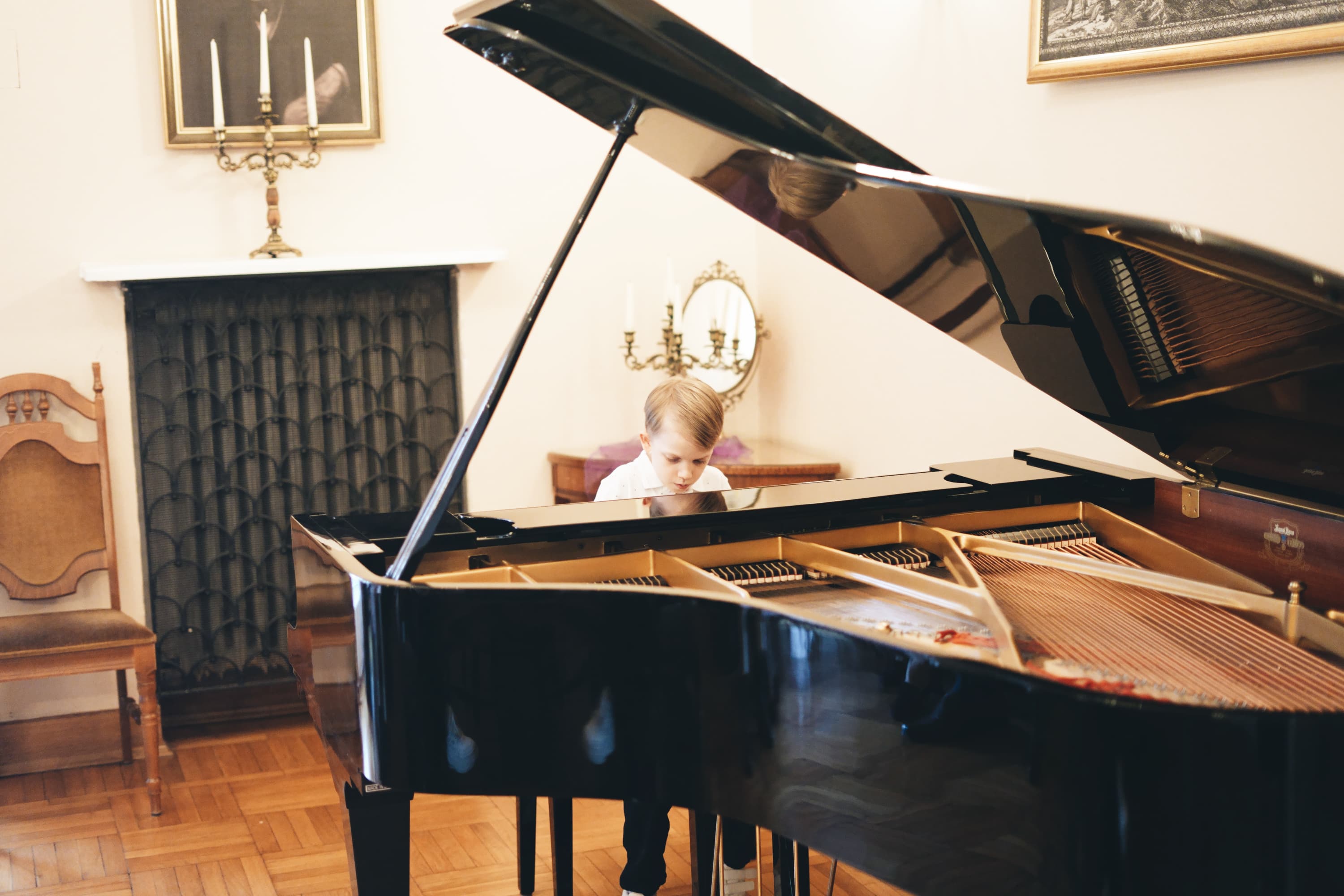
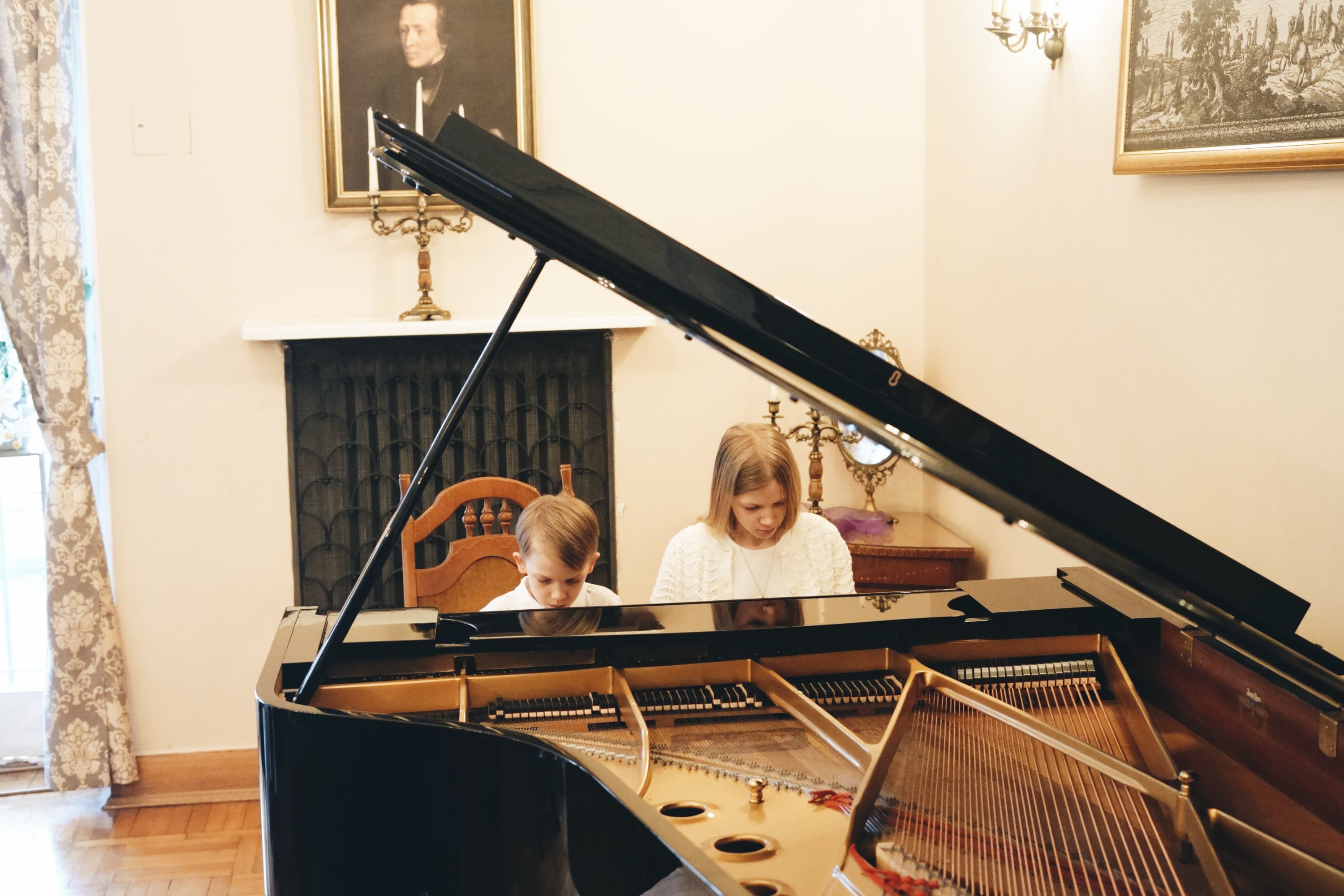
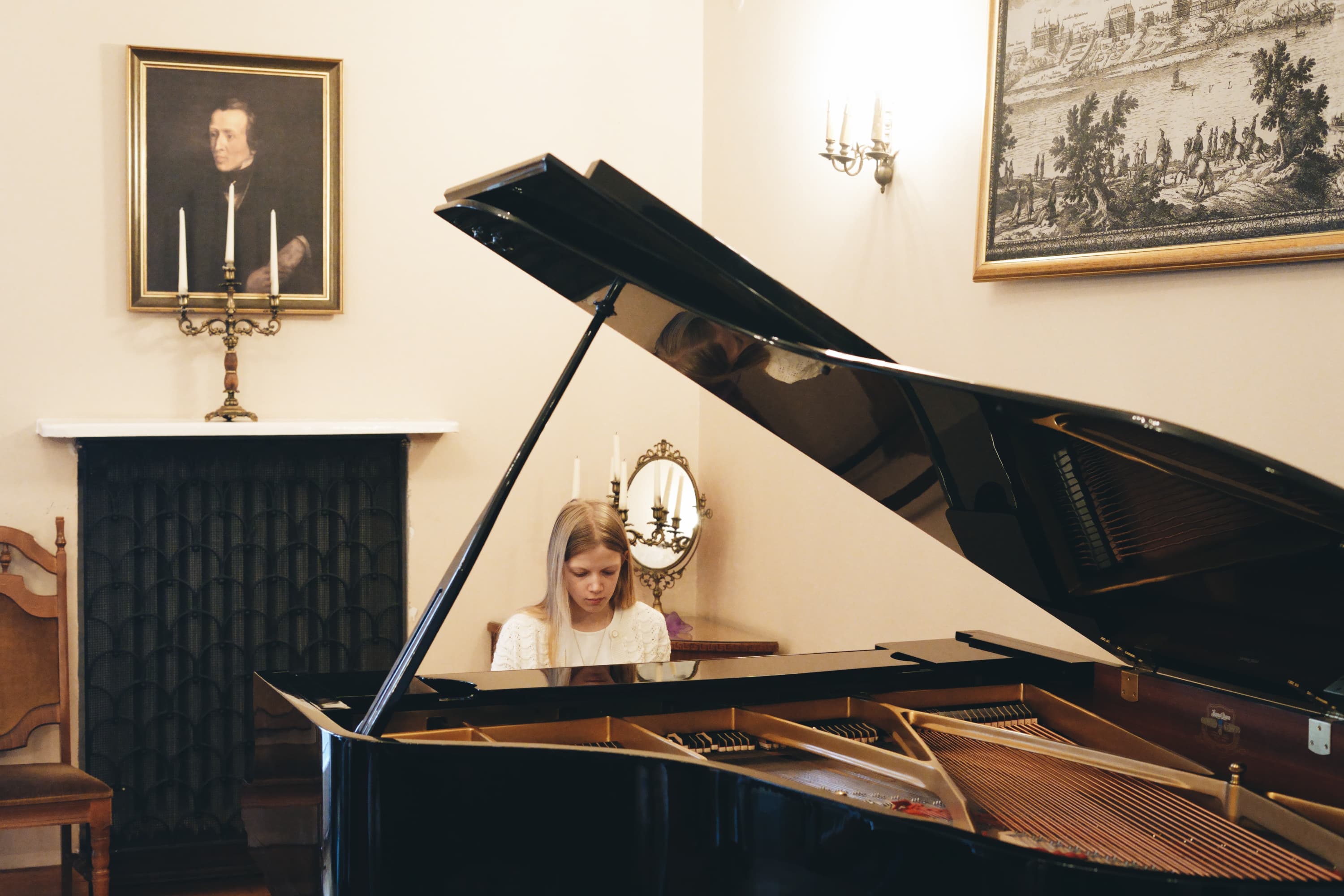


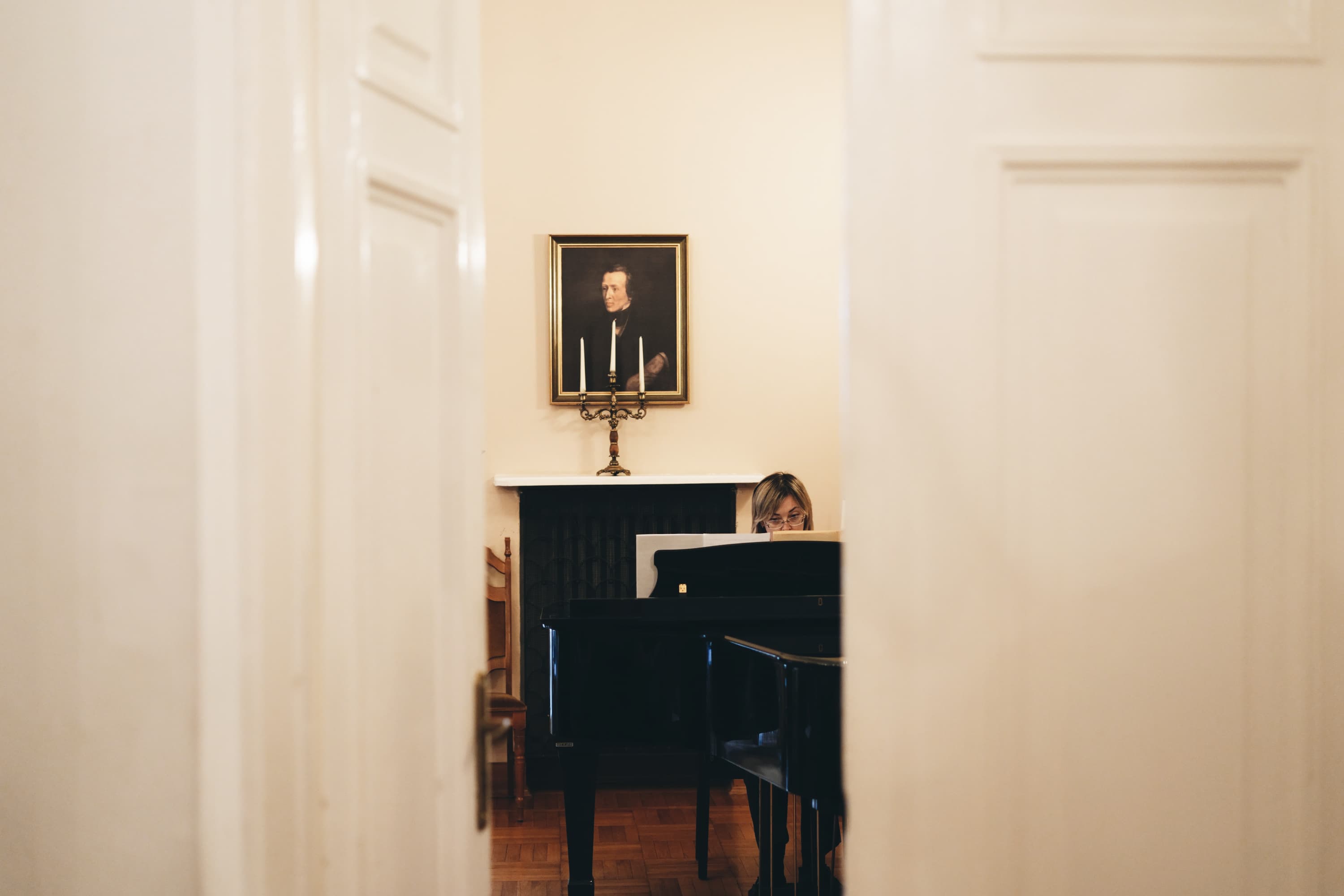



We built the programme so that short pieces by the youngest players would sit alongside works by students who have been with us for several years. Parents of children taking their first steps at an instrument can see where the road leads, and the older students are reminded of where they started.
From the piano class of Anastazja Seraya:
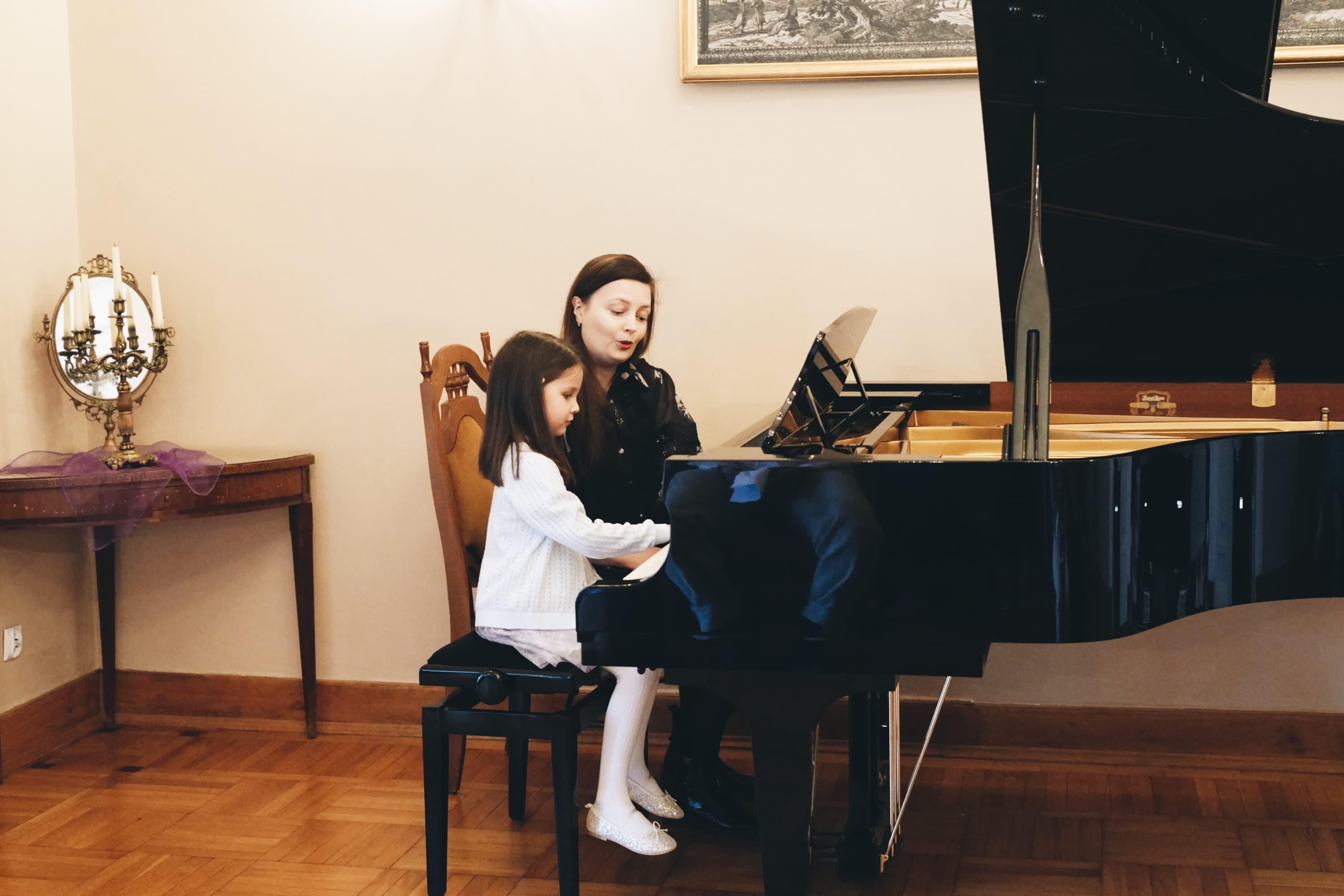
Little Celinka Naduykov appeared in the hall and, together with her teacher, played the song “The Fox” from the musical “Mr Blot”. From the same class we also heard:
- Antonia Marks with the song “The Kitten” by Katarzyna Kulikowska,
- Laura Altenberg with the miniature “Little Dance” by Agnieszka Lasko,
- Max Szubert, who played “Hopak” by Alan Haughton,
- Laura Szubert with “The Wind” by Chee-Hwa Tan,
- the siblings Max and Laura Szubert, who also appeared as a duet with a Scherzo by Anton Diabelli,
- Jeremi Filar with “Anitra’s Dance” by Edvard Grieg.
From the violin class of Piotr Nermer:
- Weronika Brona, who played four movements of the Sonata in A major by Arcangelo Corelli,
- Czuczu, whom we heard in “Variations” by Anatoly Komarovsky,
- Mateusz Matys with the “Ballade” by Charles Dancla,
- Walentina Khodas with the Serenade attributed to Joseph Haydn.
From the piano class of Hanna Malashka:
- Julian Farafonow with a passage from the overture to the opera “William Tell” by Gioachino Rossini and with a Mazurka by Krystyna Druszkiewiczowa,
- Klara Farafonow, whom we heard in a passage from the Nocturne in E flat major op. 9 no. 2 by Fryderyk Chopin,
- Viktor Klimaszewski, who played two pieces: “The Tidy Fourth” and “Grandpa’s Story of the Fifth”,
- Melania Mayanowa with a passage from the “Waltz of the Flowers” from Pyotr Tchaikovsky’s ballet “The Nutcracker”.
From the piano class of Tatiana Fedchun:
- Aistis Germanavicius, who performed two pieces: “Pinocchio” by Boris Savelyev and an Étude by Théodore Lack.
Aistis Germanavicius also played the flute, in a passage from the “Pas de quatre” from Pyotr Tchaikovsky’s ballet “Swan Lake”. He studies the flute in the class of Kaja Morawiec.
From the violin class of Zofia Zwolińska:
- Łucja Szlesinger-Lipska, who played the song “Uphill” from the violin teaching repertoire,
- Rouxi Wang, whom we heard in a “Song” by Jean-Baptiste Lully,
- Lukas Germanavicius, who appeared on the platform three times, performing “Chanson triste” by Pyotr Tchaikovsky, the Sarabande and Gavotte by Arcangelo Corelli, and an Aria and Rondinella by George Frideric Handel,
- Ting Yui Lenung with the third movement of the Concertino by Grażyna Bacewicz.
The concert closed with a performance by Adam Geijbowicz, also a student of Zofia Zwolińska, in whose hands we heard the first and second movements of the Concert Sonata by Francesco Maria Veracini.
The violin students were accompanied by Tatiana Fedchun, and the soloists were introduced by Liza Maria Pietraga.
The programme of the Spring Concert
The programme covered music from four centuries. Putting together a range that wide was not accidental, because every student is given a piece matched to whatever they are currently working on.
Baroque and classical
Arcangelo Corelli was heard twice, in the Sonata in A major and in the pairing of Sarabande and Gavotte. We also heard George Frideric Handel, Jean-Baptiste Lully and Francesco Maria Veracini, whose Concert Sonata closed the whole afternoon. From the classical period came the Serenade attributed to Joseph Haydn and a Scherzo by Anton Diabelli. Baroque music teaches phrasing and an even rhythm, which is why it returns to our concert programmes regularly.
Romanticism and the nineteenth century
Klara Farafonow played a passage from Fryderyk Chopin’s Nocturne in E flat major op. 9 no. 2, one of the most frequently played piano pieces in the world. Julian Farafonow reached for the overture to Rossini’s “William Tell”, Jeremi Filar for Grieg’s “Anitra’s Dance”, and Mateusz Matys for the “Ballade” by Charles Dancla, a composer who wrote mainly with violin students in mind.
Polish composers in the programme
Besides Chopin, we heard the Concertino by Grażyna Bacewicz, whose third movement was performed by Ting Yui Lenung. Bacewicz was herself an outstanding violinist and wrote for the violin the way someone who plays the instrument writes for it. The youngest students also reached for Polish repertoire: Antonia Marks played “The Kitten” by Katarzyna Kulikowska, Laura Altenberg a miniature by Agnieszka Lasko, and Julian Farafonow a Mazurka by Krystyna Druszkiewiczowa.
Pieces written for students
A separate group were pieces written specifically for the first years of learning. The titles of two miniatures from Viktor Klimaszewski’s programme, “The Tidy Fourth” and “Grandpa’s Story of the Fifth”, refer directly to the intervals a child learns in lessons. “Hopak” by Alan Haughton, “The Wind” by Chee-Hwa Tan, “Pinocchio” by Boris Savelyev and the Étude by Théodore Lack belong to the same category. Such pieces are matched to what a child’s hand can do, and yet they sound like real music rather than an exercise.
There was music from outside the classroom as well. The concert opened with “The Fox” from the musical “Mr Blot”, played by Celinka Naduykov together with her teacher.
Tchaikovsky on three instruments
Pyotr Tchaikovsky appeared in the programme three times, and each time on a different instrument. Melania Mayanowa played a passage from the “Waltz of the Flowers” from “The Nutcracker” on the piano. Lukas Germanavicius performed “Chanson triste” on the violin. Aistis Germanavicius played a passage from the “Pas de quatre” from “Swan Lake” on the flute.
For the audience this was a good way to hear how the same music changes character with the instrument. The same composer sounds one way under a pianist’s fingers, another under the bow, and different again in a flautist’s breath.
A first time on the platform
A concert debut is a moment a child remembers for years. That is exactly why we prepare a first performance differently from the ones that follow. The piece has to be familiar enough to be played even under considerable nerves, and the youngest students play alongside their teacher, who sits next to them at the same instrument.
The way of practising at home changes in the final weeks too. Instead of working on individual bars, the student plays the piece whole, from beginning to end, without stopping at slips. The point is to be able to recover from a small mistake on the platform and carry on, rather than going back to the start of the phrase.
Duets and playing with the teacher
Besides the solo performances we heard Celinka Naduykov playing together with her teacher, and the siblings Max and Laura Szubert in a piano duet. The violin students were accompanied at the piano by Tatiana Fedchun.
Playing with another person teaches things that solo practice cannot. You have to listen to your partner, hold a shared tempo and know when to give way as the melody passes to the other part. Students who have played one duet usually ask for another themselves.
Two appearances deserve a separate mention: Lukas Germanavicius, who came to the platform three times, and Aistis Germanavicius, who played two instruments that afternoon, the piano and the flute.
Concerts at Unisono Music Academy
We hold concerts several times a school year and treat them as part of learning rather than an extra for the best students. Everyone who wants to takes the platform, from small children to adults, whatever their length of time at the instrument.
Playing in public does something to home practice that no lesson can. The student hears their piece in the acoustics of a large room, plays an unfamiliar instrument and learns to manage nerves. After a few such appearances the nerves do not disappear, but they stop getting in the way.
The end of the concert
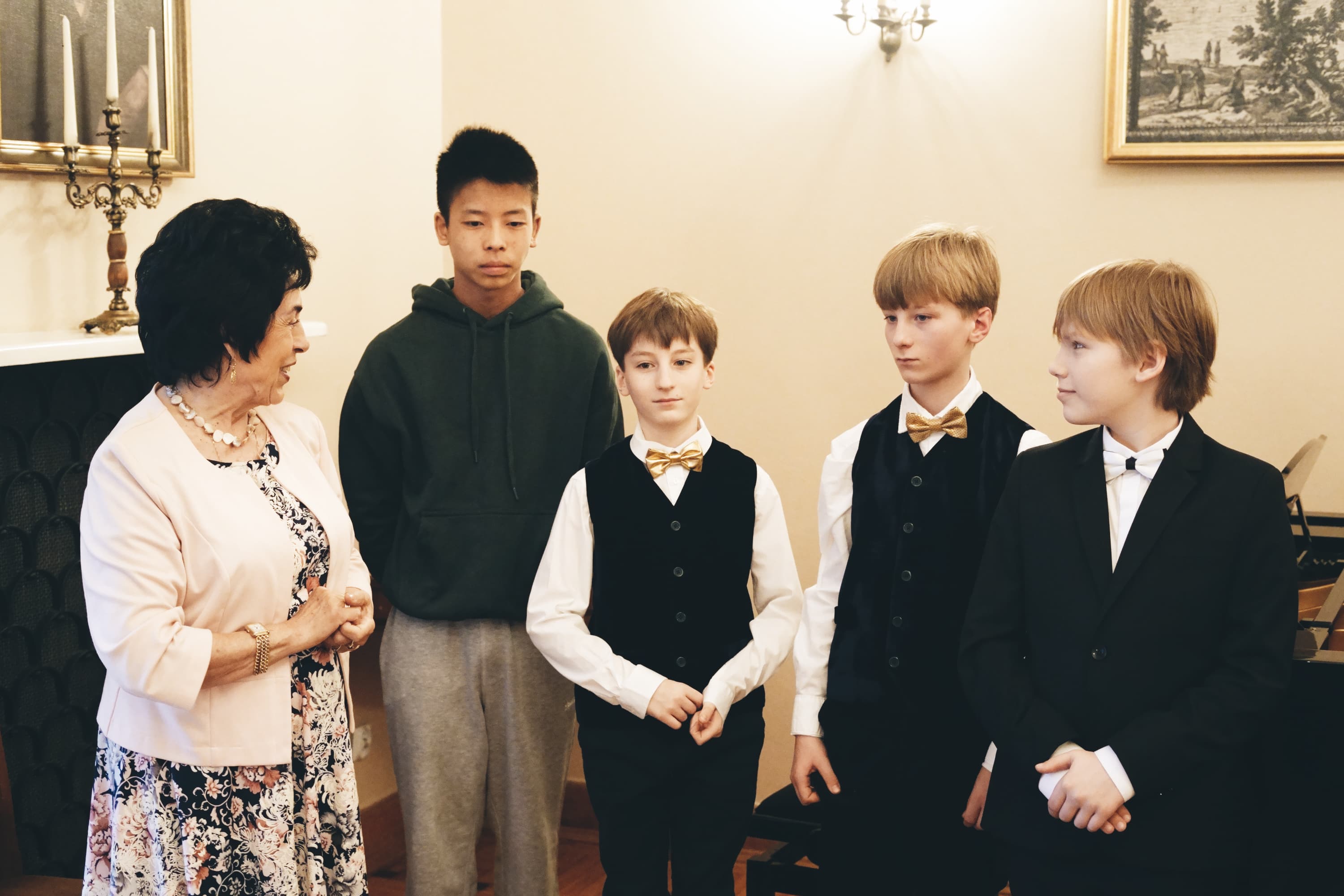
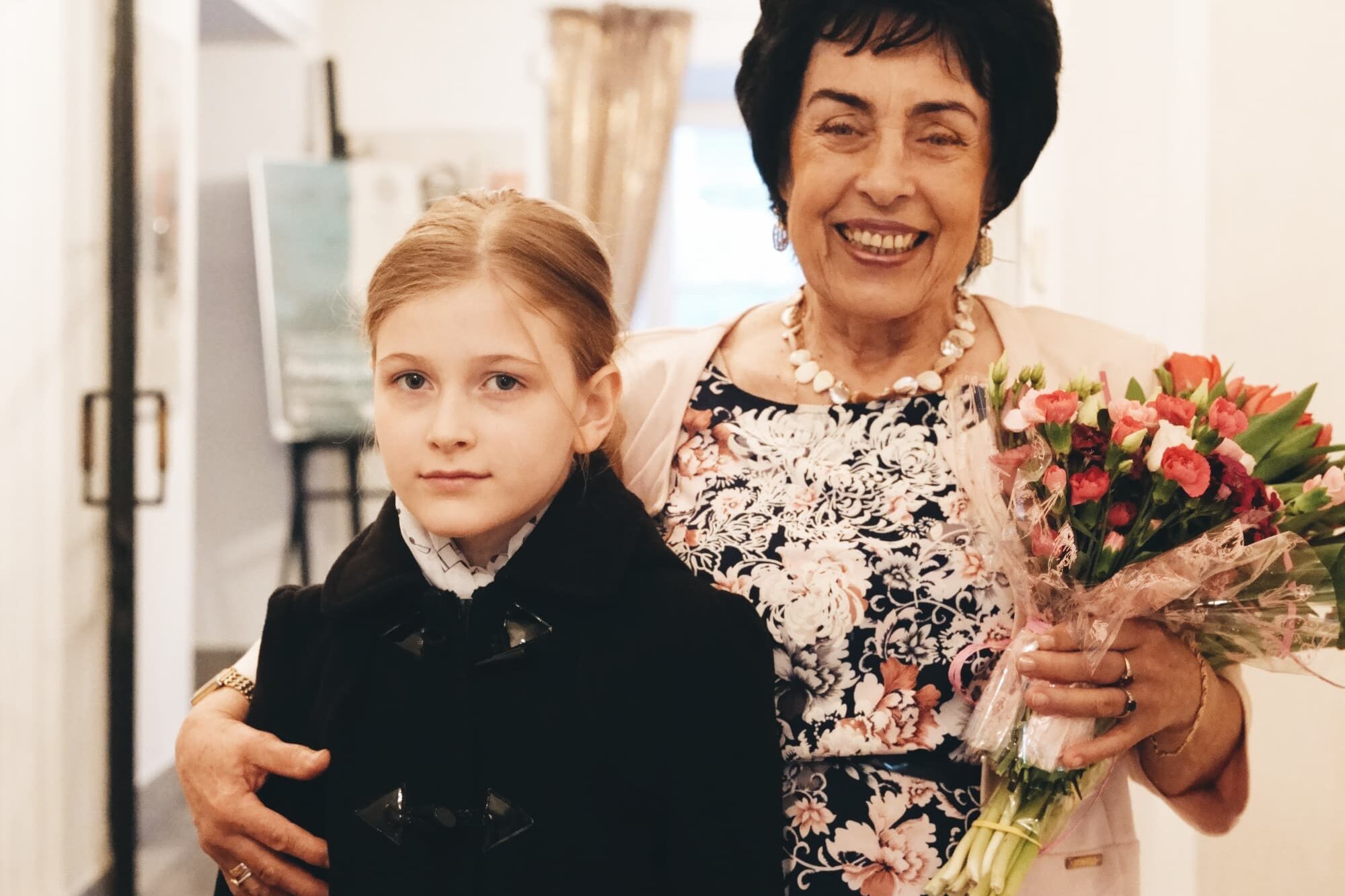
After the concert the director of the school, Zofia Zwolińska, invited all the soloists onto the platform and congratulated them on their performances. She also thanked the teachers who had contributed to the students’ progress, and the parents and grandparents for supporting their children’s musical development.
Those thanks are not a courtesy. Fifteen minutes at the instrument every day does more than one long session on a Saturday, and keeping an eye on that is the job of the household rather than the school. The results of that work could be heard on the platform on 29 March.
The Spring Concert closed the winter half of the season. Our next gathering was the Annual Concert 2026, which in June summed up the whole school year.
Enrolment for music lessons in Warsaw
Unisono Music Academy gives individual lessons in piano, violin, flute, guitar and cello, as well as singing lessons. Classes take place in Warsaw and are taught by working musicians, whose profiles you can find on the teachers page.
You can begin at any point in the school year and at any age. If you would like to enrol your child or yourself for a first lesson, please get in touch.